No strategy beats Tower Rush's house edge, but these cash-out and bankroll habits keep a session structured. See the common approaches and their trade-offs.
"Strategy" searches around Tower Rush usually mean one thing: a system to decide when to cash out. None of the approaches below change the game's underlying RTP - every floor is an independent random event - but they do change how predictable your session feels, which is worth something on its own.
0
Strategies that beat the house edge
95.1-97.6%
RTP regardless of approach
1
Thing that matters: bankroll discipline
Common Cash-Out Approaches
Early cash-out: bank a small, reliable multiplier after just a couple of floors rather than chasing height.
Target multiplier: decide on a cash-out point before the round starts and stick to it, win or lose.
Flat staking: use one bet size (e.g. a fixed amount between ₨112 and ₨112000) for a whole session so the budget stays predictable.
Session limits: set a loss cap and a win target before you start and stop at whichever hits first.
Early cash-out
Lower variance, steadier small wins
Easier to keep a session's budget predictable
Less exposure to a sudden missed floor
Chasing height
Higher chance of losing the whole bet
Bigger swings, harder to predict a session's result
Needs a bonus floor or luck to pay off often
Session bankroll (PKR)
Suggested flat bet
Rounds covered
₨2,250 (20x min bet)
₨112
~20 rounds
₨5,000
₨150-250
~20-30 rounds
₨10,000
₨300-500
~20-30 rounds
What Doesn't Work
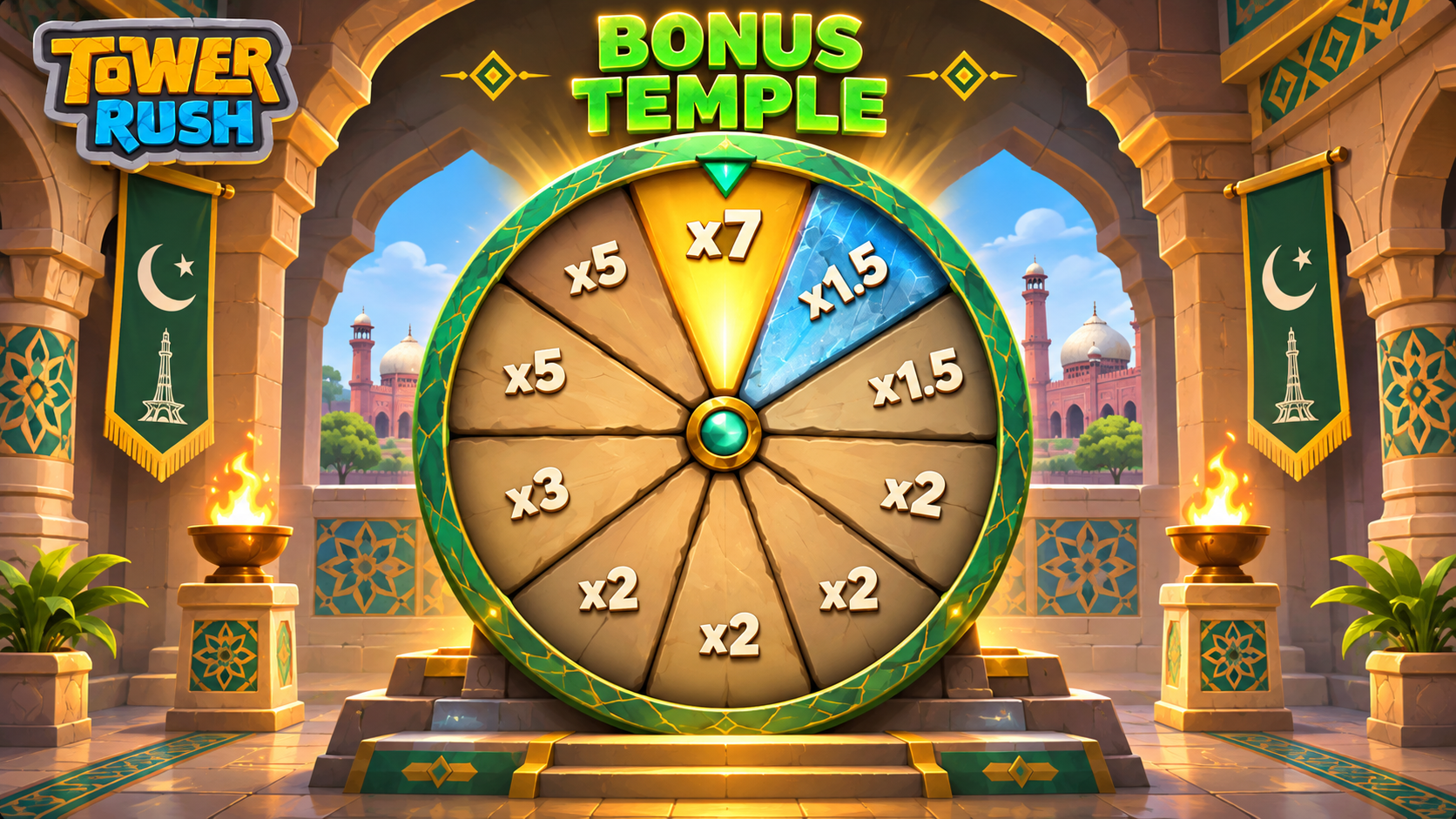
Bonus floors are random triggers, not something any betting pattern can force.
Betting systems that raise your stake after a loss (martingale-style) are a common trap in crash-style games. Because every floor is independent, a losing streak says nothing about what the next round will do - raising bets to chase it back only increases how much you can lose in one round.
Try a Target Before You Play for Real
Use the calculator below to see how a bet and a cash-out target combine into a payout - it's the same arithmetic the free demo lets you practise with no risk.
Target payout calculator
Payout at that target
Illustrative only - it does not predict any real round's outcome.
Practise a target before you play for real
Set a cash-out target in the free demo and see how it actually plays out.
Frequently Asked Questions
Is there a strategy that beats Tower Rush?
No. Each floor's outcome is independent and random, so no cash-out pattern changes the underlying house edge. These approaches are risk-management habits, not ways to beat the game.
What's the safest way to play?
Flat staking with an early, consistent cash-out target and a firm session loss limit. It won't produce the biggest wins, but it keeps variance and losses predictable.
Should I chase a missed round by raising my next bet?
No - rounds are independent, so a previous miss has no bearing on the next one. Raising bets to 'win back' a loss (martingale-style) increases risk without improving your odds.
Is it better to cash out early every time, or aim for bigger multipliers?
Neither is objectively 'better' - early cash-outs lower variance and losing streaks, while aiming higher increases both potential wins and the chance of losing the whole bet. It's a trade-off to match to your own bankroll and risk tolerance, not a solved problem.
How do I size my bankroll for a Tower Rush session?
A common rule of thumb for crash-style games is to divide a session bankroll into 20-30 equal bets, so a losing streak doesn't end the session in a handful of rounds. For example, a ₨5,000 session budget might use roughly ₨150-250 flat bets rather than one large stake.
Should my bet size change based on how the tower is going?
Flat staking (the same bet every round) keeps the maths predictable and avoids accidentally turning a bad run into a much bigger loss. Varying bet size mid-session based on recent results is a common habit, but it doesn't change the independent, random nature of each floor.
None of this beats the house edge. Tower Rush does not track past rounds or build toward anything. Set a deposit and time limit before you start, and treat losses as final rather than something to chase. 18+.